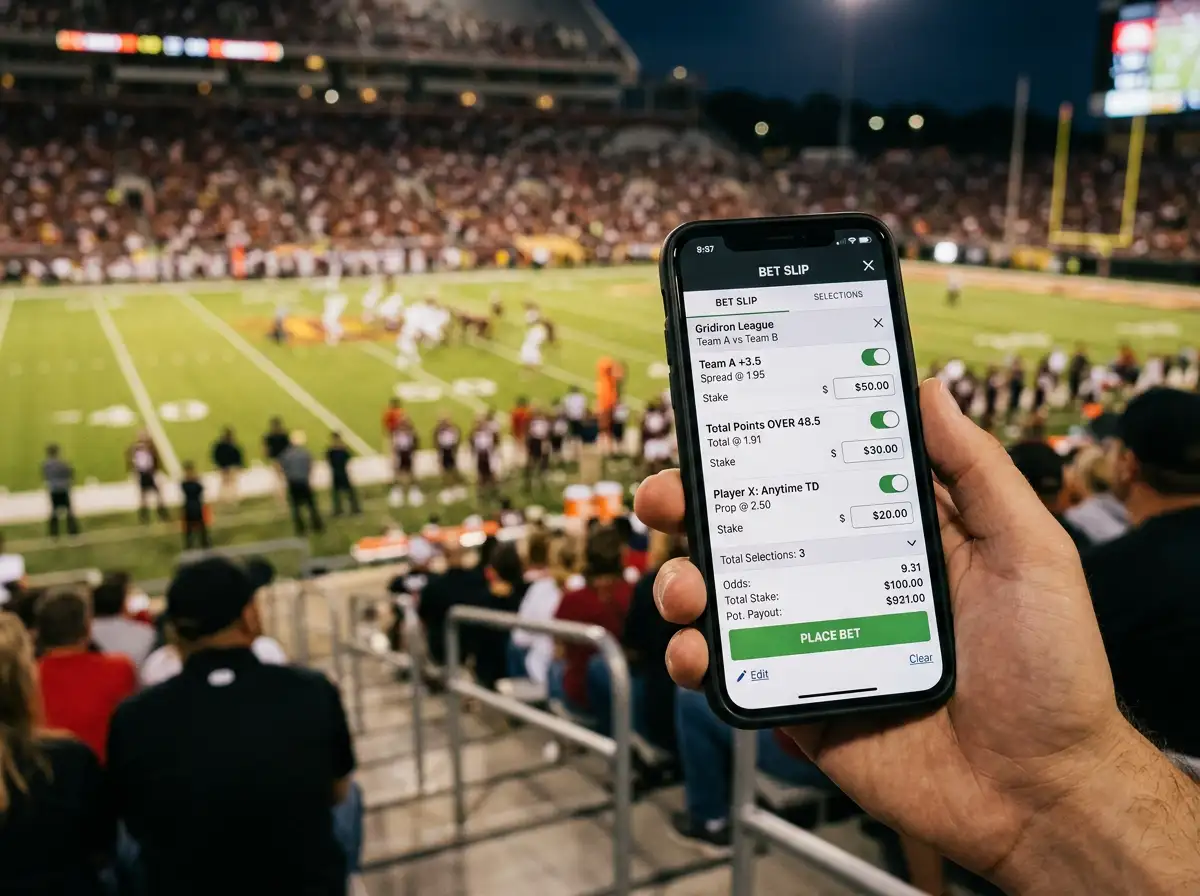
NFL Thursday Night Football Betting Odds 2026 and Short-Week Lines
 Available in US
The Super Bowl LX drew 127.7 million viewers – a peak that reached 137.8 million during the second quarter – confirming the NFL’s status as the most-watched sporting event in the world. Thursday Night Football operates at the opposite end of the spectacle scale, but for bettors it offers something the Super Bowl doesn’t: a structural edge hidden in the short-week scheduling that most casual punters overlook.
I’ve tracked Thursday Night Football outcomes against the spread and totals for years, and the patterns are consistent enough to build a repeatable approach around. The short week creates measurable performance effects that the market doesn’t always price correctly. This guide breaks down what those effects are and how UK punters can use them.
Short-Week NFL Roster Fatigue and Betting Lines
Standard NFL preparation involves six days between games – play Sunday, recover Monday, game-plan Tuesday through Thursday, walk-through Friday, rest Saturday, play Sunday. Thursday Night Football compresses this to three days for both teams. Three days less preparation, three days less physical recovery, three days less scheme installation.
The effects are measurable across multiple performance dimensions. Injury rates on Thursday Night Football have historically run higher than Sunday games, likely due to reduced recovery time. Offensive complexity tends to decline – teams lean more heavily on base schemes and familiar play calls because they haven’t had time to install game-specific packages. This shows up in the data as lower passing efficiency and increased reliance on rushing, particularly in the first half.
The team coming off a Sunday afternoon game faces a different challenge than one coming off Monday Night Football. A team that played Sunday has four days to prepare; a team that played Monday night has three. This one-day difference, while seemingly trivial, creates asymmetry in preparation quality. When one team played Sunday and the other played Monday, the Thursday game introduces a preparation advantage that doesn’t exist in standard Sunday matchups.
Historical ATS (against the spread) data shows road teams on short weeks performing slightly worse than their season averages. The travel component compounds the preparation deficit – flying to an away venue on Wednesday night after three days of compressed preparation is a measurably different experience from a normal road game. Favourites on short weeks also show a slight underperformance pattern, though this is less pronounced than the road team effect.
Totals Trends on Thursday Night Football
Seventy-five percent of Americans now support legal sports betting in their state, and the growing market sophistication means Thursday night totals lines have tightened. But the structural bias toward lower scoring on short weeks hasn’t disappeared – it’s just been partially priced in.
Thursday Night Football games have historically produced lower combined scores than the weekly NFL average. The mechanism is straightforward: reduced preparation time hurts offences more than defences. Defensive schemes require less weekly adjustment than offensive game plans – a defence that plays its base coverage and sends its standard pass rush doesn’t need three days of special preparation. An offence trying to exploit specific defensive weaknesses does need that preparation time, and without it, the attack becomes more predictable and less efficient.
This creates a measurable unders bias. Not dramatic – we’re talking about one to two points below the weekly scoring average – but consistent enough to matter at the margins. When a Thursday game total is set at the same level it would be for a Sunday fixture between the same two teams, there’s a structural lean toward the under. The market has partially adjusted for this over the years (Thursday totals tend to be set slightly lower than equivalent Sunday matchups), but the adjustment isn’t always complete.
Divisional matchups on Thursday are the exception to the unders trend. When two teams from the same division meet on Thursday, they’ve played each other recently and are familiar with each other’s schemes. The preparation deficit matters less because both coaching staffs already know the opponent’s tendencies. These divisional Thursday games produce scoring closer to the weekly average, and the unders bias weakens considerably.
Thursday Night Football for UK Viewers and Bettors
Thursday Night Football kicks off at approximately 01:15 GMT on Friday morning – deep into the UK night. Amazon Prime Video holds exclusive UK broadcast rights, meaning any Prime subscriber can watch without additional cost.
For UK bettors, the timing creates both a challenge and an opportunity. The challenge is obvious: staying up until 4am on a work night to watch a game isn’t sustainable every week. The opportunity is subtler: because the UK betting public is largely asleep during Thursday games, in-play markets for TNF at UK bookmakers may be less liquid than Sunday games. Lower liquidity means odds can be slower to adjust, creating potential value windows for bettors who are actually watching the game.
Pre-game betting on Thursday games follows a compressed timeline relative to Sunday fixtures. Lines for Thursday games open on the previous Sunday evening and you have roughly three days to analyse and bet before kick-off. The injury report cycle is truncated – Wednesday’s initial report is also nearly the final report, since there’s no Thursday or Friday update. This compressed information cycle means the line is less refined at kick-off than a typical Sunday line, which theoretically creates more pricing inefficiency.
For UK bettors who can’t stay up for Thursday nights, pre-game betting is still fully viable – and arguably the smarter approach. The compressed preparation window means the line may not fully reflect injury news that surfaces on Wednesday, giving early bettors who monitor injury reports a brief edge over the market. Place your Thursday bet by Wednesday evening if your analysis is complete, and don’t lose sleep – literally – trying to bet a game live at 3am when your judgement is compromised by fatigue.
My personal approach to Thursday Night Football: I analyse the matchup on Monday alongside the rest of the week’s slate, place any pre-game bets by Tuesday evening, and decide by Wednesday whether the game warrants staying up to watch live for in-play opportunities. About one in three Thursday games produces a genuinely compelling betting angle; the rest I let pass. The discipline of skipping games that don’t offer edge applies doubly to Thursday nights, where the cost of engagement includes sleep as well as money. For a broader framework on when each game type offers edge, the weekly game predictions guide covers the full Sunday slate analysis process.
Why do NFL Thursday games tend to go under the total?
Reduced preparation time on a short week affects offences more than defences. Offensive game plans require specific scheme installation tailored to the opponent’s weaknesses, which suffers in a compressed schedule. Defences can fall back on base schemes more effectively. The result is slightly lower scoring on average compared to Sunday games, creating a historical unders bias.
Where can I watch Thursday Night Football in the UK?
Amazon Prime Video holds exclusive UK broadcast rights for Thursday Night Football. Any UK Amazon Prime subscriber can watch at no additional cost through the Prime Video app or website. Kick-off is approximately 01:15 GMT on Friday morning during the regular season.
Written by the editors at American Football bet.