Super Bowl Betting UK 2026: Match Winner Odds and Player Props
 Available in US
The Super Bowl is the only sporting event I set an alarm for at 4am. Not because I need to watch it live — I could catch highlights over breakfast — but because the betting markets in the final hours before kick-off are unlike anything else in the NFL calendar. Odds shift, props flood in, and the sheer volume of casual money entering the market creates pricing distortions that don’t exist during the regular season.
The American Gaming Association projected a record $1.76 billion in legal wagers on Super Bowl LX in 2026, and the game delivered a peak audience of 137.8 million viewers during the second quarter — a hundred-year record for NBC. Those numbers tell you everything about the scale of this event. It’s not just the biggest game in American football. It’s the single largest one-day betting event on the planet, and UK punters have full access to every market through their licensed bookmakers.
But here’s what twelve years of Super Bowl betting have taught me: the game’s enormous profile is both its attraction and its trap. The volume of analysis, prediction content, and media noise surrounding the Super Bowl makes it the most over-discussed sporting event in existence. Finding genuine edge requires cutting through that noise and focusing on the structural features that actually move the needle — specific market types, timing patterns, and historical data that most casual bettors never examine. That’s what this guide delivers.
Super Bowl Betting Markets: Point Spreads and Props
Super Bowl LIX in 2025 generated $1.39 billion in legal wagers — the previous record at the time — and the growth trajectory shows no sign of slowing. For UK punters, the main Super Bowl markets mirror what you’d find during the regular season, but with one crucial difference: the liquidity is vastly deeper. More money flowing through the markets means tighter odds, smaller overrounds, and better prices for the bettor. It’s one of the few NFL betting occasions where the sheer scale of the event works in your favour.
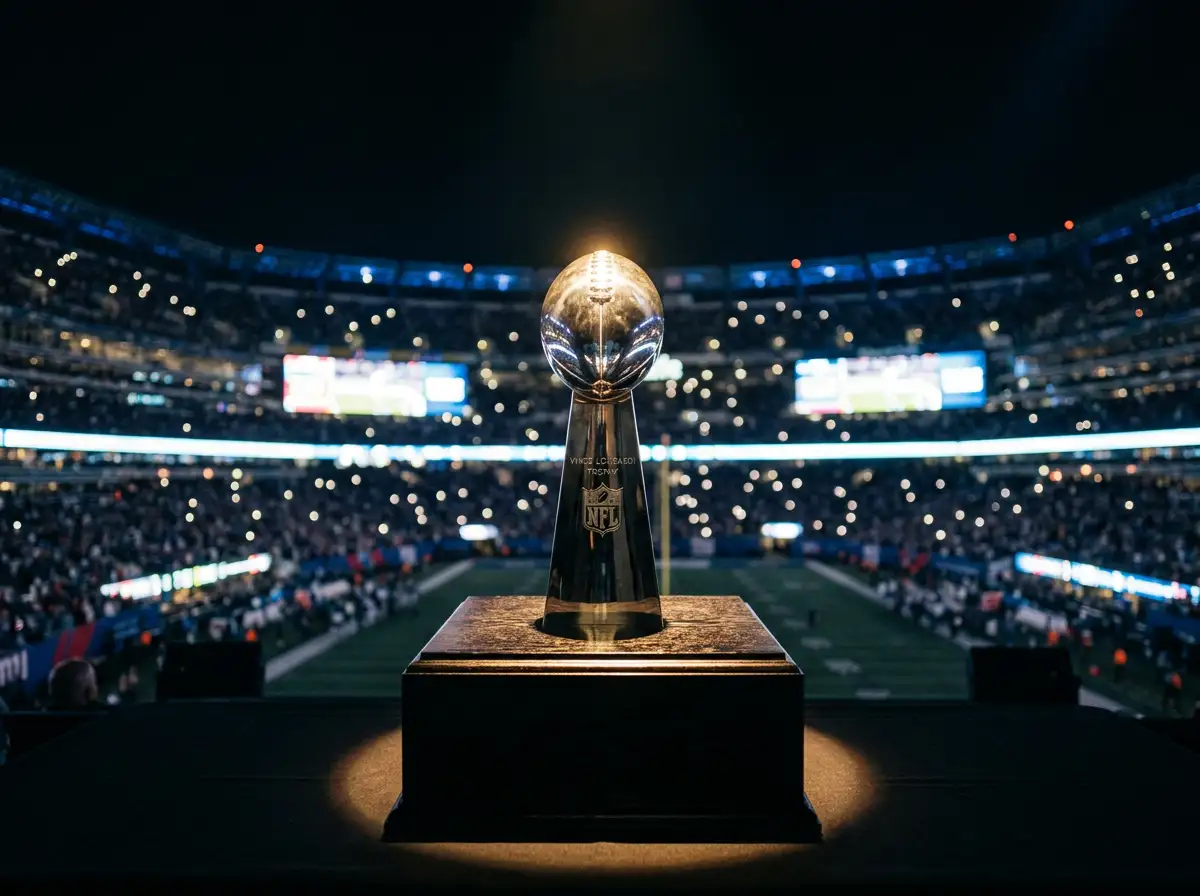
The outright winner market is the simplest proposition: pick which team lifts the Vince Lombardi Trophy. Super Bowl outright odds are available from UK bookmakers the moment the previous Super Bowl ends — meaning you can bet on next year’s champion before the current offseason has even begun. Those pre-season prices carry the most value and the most risk. A team priced at 20/1 in March might be 3/1 by the time they reach the Super Bowl in February, but they might also miss the playoffs entirely. The further in advance you bet, the bigger the potential return and the wider the uncertainty.
The spread market is where most sharp Super Bowl money concentrates. The bookmaker sets a handicap — say, Team A -2.5 — and your job is to decide whether that number is accurate. In a game with two weeks of preparation, coaching matchups and schematic adjustments matter far more than they do during the regular season. I pay close attention to how each coaching staff has performed in previous playoff games, particularly their ability to game-plan against specific offensive and defensive schemes. A two-week preparation window amplifies coaching quality in a way that a standard six-day turnaround doesn’t.
The total (over/under) is the third core market. Super Bowl totals have historically been set higher than the average regular-season game — typically between 47 and 52 points — reflecting the assumption that two of the league’s best offences will produce a high-scoring spectacle. Whether that assumption holds in any given year depends entirely on the matchup. A Super Bowl between two elite defences will look very different from one between two high-powered passing attacks, and the total needs to reflect the specific teams involved rather than generic Super Bowl expectations.
The MVP market adds another dimension. Super Bowl MVP odds are released as soon as the matchup is confirmed and are dominated by quarterbacks — roughly 60% of all Super Bowl MVPs have been quarterbacks. Running backs and wide receivers who score multiple touchdowns are the typical non-QB winners. The MVP market is one where the favourite wins more often than the odds suggest, largely because quarterback dominance is so consistent. If you believe one quarterback will have a standout performance, the MVP market can offer better value than the outright winner because the MVP price is often slightly longer.
Super Bowl Prop Bets: The Complete UK Menu
Consumer spending around Super Bowl 2026 hit a record $20.02 billion, and a meaningful chunk of that flowed into prop bets — the side markets that turn every conceivable aspect of the event into a wagering opportunity. Props are where the Super Bowl transforms from a football game into a cultural phenomenon for bettors, and UK bookmakers have expanded their Super Bowl prop menus significantly over the past few years.
Player performance props form the backbone. These are the markets I take most seriously because they’re closest to standard NFL betting analysis. Passing yards (will the quarterback throw over or under 275.5 yards?), rushing yards (will the running back exceed 80.5?), receiving yards, completions, interceptions, and touchdown scorers — all of these are available at major UK bookmakers for the Super Bowl, often with more granular options than you’d see during the regular season.
The anytime touchdown scorer market is a particular favourite of mine for the Super Bowl. The pricing on this market tends to be softer than during the regular season because casual bettors flood in, pushing prices on popular players below their true probability. Meanwhile, less glamorous players — a slot receiver who consistently operates in the red zone, or a goal-line running back — often remain underpriced. Red zone target share and red zone rushing attempts are the two statistics that matter most for this market. If a player receives 30% or more of his team’s red zone targets during the season, his anytime touchdown price at the Super Bowl should reflect that. It often doesn’t, because the pricing is influenced by name recognition as much as by data.
Game props cover broader events within the game. First scoring play (touchdown, field goal, or safety), first team to score, total touchdowns in the game, whether both teams will score in every quarter, and which quarter will have the most points. These markets tend to have higher overrounds than player props because they’re harder to model and attract more recreational money. I approach them selectively — if my analysis of the matchup gives me a strong view on the likely game script (for example, that one team’s defence will dominate early, making a field goal the most probable first score), a game prop can offer value that the spread and total don’t capture.
Entertainment props — the length of the national anthem, the colour of the halftime performer’s outfit, whether a specific song will be played — exist at some UK bookmakers but sit firmly in the novelty category. I don’t bet them. They’re pure guesswork with margins that would make a roulette wheel blush. If you enjoy them as entertainment, fine, but they have no place in a serious betting strategy.
One structural note about Super Bowl props at UK bookmakers: the menu is typically released in stages. Main markets appear two weeks before the game. Player props follow a week out. Novelty and entertainment props arrive in the final days. If there’s a specific prop you want to bet, don’t wait until the last minute — the best prices are usually available when the market first opens, before the public money pushes popular selections to shorter odds.
The same game parlay guide covers how to combine multiple Super Bowl selections into a single bet, including the correlation strategies that make some combinations far smarter than others.
Super Bowl Betting Timeline: From Conference Finals to Kick-Off
Bill Miller of the American Gaming Association put it simply when discussing Super Bowl LX: “No single event brings fans together like the Super Bowl, and this record figure shows just how much Americans enjoy sports betting as part of the experience.” For UK punters, the two-week window between the conference championship games and the Super Bowl is a carefully structured betting timeline, and understanding it gives you an advantage over the majority who only think about their bets on game day.
The moment both conference championship games end — typically a Sunday evening, late night UK time — the Super Bowl matchup is confirmed and opening lines appear. These opening lines are based on power ratings, regular-season and playoff performance data, and the bookmaker’s model. The opening spread and total are the purest expressions of the market’s initial assessment, before any money has moved the numbers. If your own analysis suggests the opening line is significantly off, this is the highest-value window of the entire two-week period. I aim to have my initial assessment ready within a few hours of the matchup being confirmed, which means staying up until the early hours on that Sunday night or waking early on Monday morning.
Monday through the first Friday is the “sharp window.” Professional bettors and betting syndicates place their primary bets early in the week, and the spread can move by a full point or more during this period. If the opening spread is -1.5 and it moves to -3 by Friday, that tells you sharp money believes the favourite is stronger than the opening line suggested. Tracking this movement informs your own analysis — you don’t need to blindly follow the sharp money, but knowing which direction they’re pushing gives you a valuable data point.
The second week is the “public window.” This is when the vast majority of recreational bets are placed, driven by media coverage, social media hype, and office pools. Public money typically flows toward the favourite, the over, and popular player props. This influx often pushes the spread wider and the total higher than they should be, creating late-week value on underdogs and unders. I watch the line movement carefully during this second week, looking for situations where the number has moved beyond what the matchup justifies.
Game day itself is a marathon from a UK perspective. Super Bowl kick-off is typically around 11:30pm GMT — late enough that many casual UK bettors have placed their bets earlier in the day and aren’t actively managing their positions. For those willing to stay up, the final two hours before kick-off offer the last wave of odds adjustments as weather reports confirm, inactive lists are finalised, and last-minute prop markets open. I treat that final window as an opportunity for targeted prop bets rather than main-market adjustments, since the spread and total are usually well-settled by then.
Data-Driven Super Bowl Betting Angles
The global commercial gambling market in the US alone generated a record $78.72 billion in gross gaming revenue during 2025, with the Super Bowl serving as the single biggest annual catalyst for new bettors entering the market. That influx of inexperienced money creates specific pricing patterns that recur year after year. Here are the angles I’ve found most consistently valuable over a decade of Super Bowl betting.
Underdogs against the spread have a long, well-documented history of outperforming expectations in the Super Bowl. Over the last twenty-five Super Bowls, underdogs have covered the spread approximately 55-60% of the time — well above the 50% breakeven threshold. The reason is structural: the two-week preparation window disproportionately benefits the underdog’s coaching staff, who have time to develop specific schemes to neutralise the favourite’s strengths. Favourites, meanwhile, are often game-planned against their own tendencies from an entire season of film. The market — driven by public money on the favourite — tends to push the spread wider than it should be, creating consistent value on the underdog side.
Totals also show a historical lean toward the under. The average Super Bowl total has been set higher than the game’s actual combined score in more seasons than not, partly because bookmakers know the public loves betting overs on big games and price accordingly. Defence and special teams tend to elevate their performance in the Super Bowl because of the extra preparation time, and first-half scoring is often suppressed as both teams play conservatively in the opening twenty minutes. I don’t bet the under blindly, but I do give it extra consideration when the total is set above 50, which is where the overcorrection from public-side over bets tends to be most pronounced.
The defensive matchup angle is one most casual bettors overlook entirely. The Super Bowl is typically decided by which defence creates more disruption — turnovers, sacks, and third-down stops. I build a simple matchup grid before every Super Bowl: Team A’s offensive line versus Team B’s pass rush, Team A’s secondary versus Team B’s receiving corps, and vice versa. If one side has a clear schematic advantage — say, an elite pass rush against a mediocre offensive line — that advantage tends to manifest more strongly in the Super Bowl than during the regular season because the two-week preparation window lets the defence fully game-plan their pressure packages.
The contrarian approach isn’t about being different for the sake of it. It’s about recognising that when 70% of the public bets on one side, the bookmaker adjusts the price to balance their book, which means the unpopular side is often getting a better number than the matchup warrants. In the Super Bowl, where public sentiment is amplified by media coverage and national attention, the contrarian discount is typically larger than in a regular-season game. I track the percentage of bets on each side through free tracking sites during the two-week window and use that data as one input — not the only input — in my decision-making process.
A final angle that’s specific to UK punters: the late-night factor. Because the Super Bowl kicks off close to midnight GMT, many UK bettors place their bets hours in advance and don’t adjust during the game. That means the live betting market during the Super Bowl has less UK participation than a regular-season Sunday afternoon game, but the markets are still available. If you’re staying up to watch, the live spread at half-time can offer genuine value for the reasons I outlined in the live betting guide — first-half performance doesn’t always predict second-half outcomes, and the half-time line is prone to overweighting recent events.
Super Bowl Betting FAQ
When do UK bookmakers release Super Bowl odds?
Outright Super Bowl winner odds are available year-round — most UK bookmakers post next season’s odds within days of the current Super Bowl ending. Spread, total, and prop markets for the specific matchup appear once the conference championship games confirm the two teams, typically two weeks before the game. Player props and novelty markets are added in stages during that two-week window, with the full menu usually available by the final Wednesday before the game.
What are the most popular Super Bowl prop bets in the UK?
Anytime touchdown scorer is consistently the most popular Super Bowl prop among UK bettors, followed by first touchdown scorer, total passing yards for each quarterback, and the first scoring play type (touchdown vs field goal). Game props like total touchdowns and whether both teams will score in every quarter also attract significant interest. Entertainment props (anthem length, halftime show details) are available but represent a small fraction of overall prop betting volume.
Can I bet on the Super Bowl halftime show with UK bookmakers?
Some UK bookmakers offer novelty markets on the halftime show, including which songs will be performed, the length of the performance, and guest appearances. These markets carry very high overrounds (often exceeding 20%) and are essentially entertainment bets with no analytical edge. They’re available at select operators and typically appear in the final few days before the game.
What time does the Super Bowl start in the UK?
The Super Bowl typically kicks off at approximately 11:30pm GMT (or 12:30am BST if the game falls after the clocks change in March). The game itself lasts roughly four hours including the extended halftime show, meaning it finishes around 3:30-4:00am UK time. Pre-game coverage on UK broadcasters usually begins around 10:00pm GMT.
Created by the ”American Football bet” editorial team.