NFL London Games Betting Odds: Wembley and Tottenham Matches
 Available in US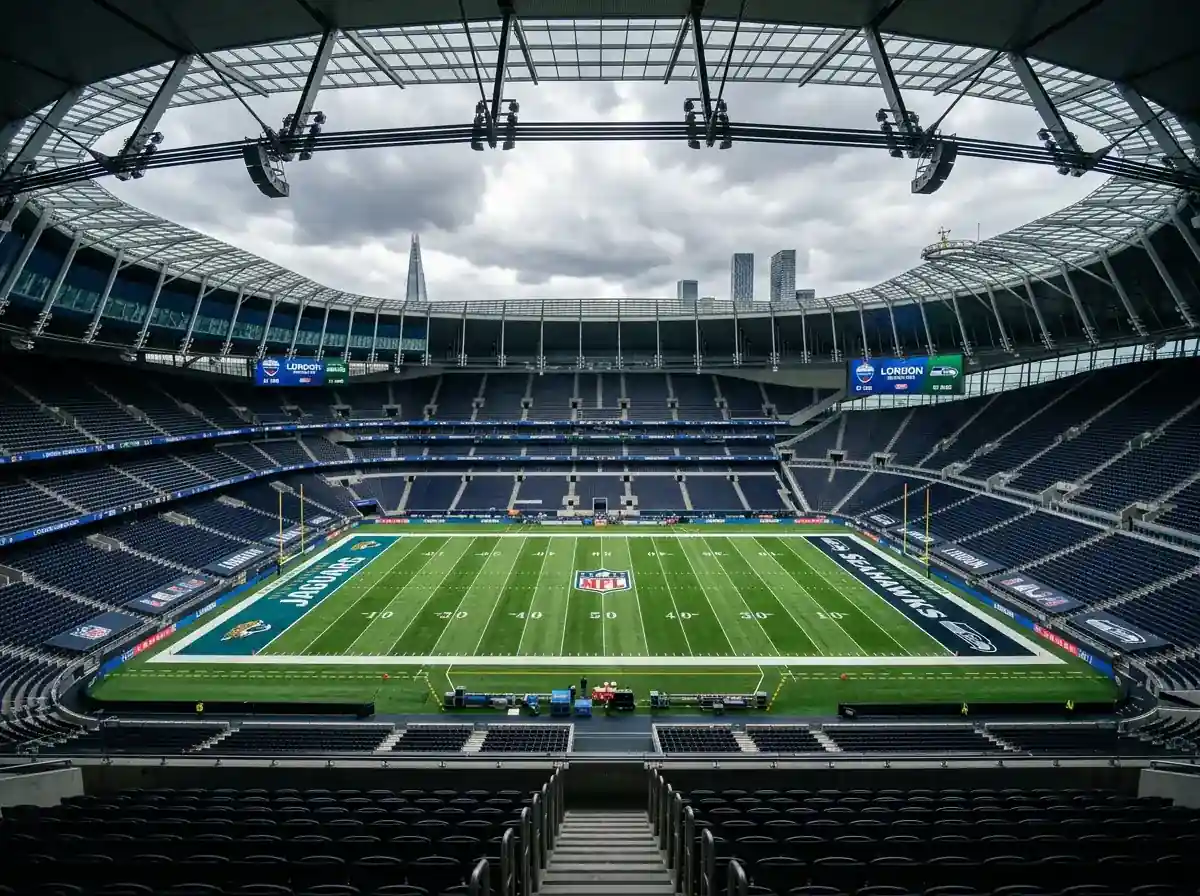
More than six million people watched the London NFL games in 2025 – a viewership record for the international programme. Those games weren’t just spectacles. They were betting events with unique angles that don’t exist in standard Sunday NFL action, and UK punters are better positioned than anyone to exploit them.
I’ve attended London games and I’ve bet on every single one since the programme expanded. The data tells stories that casual analysis misses: travel distance matters, home-team designation is largely fictional, and the Tottenham Hotspur Stadium surface affects play in measurable ways. This is the deep dive into London game betting that no bookmaker landing page will give you.
What makes London games analytically interesting is their structural uniqueness. No other NFL fixture features two teams playing on neutral ground after transatlantic travel, in a different time zone, in front of a crowd with divided loyalties. Every one of those factors creates a potential edge for the bettor willing to quantify it.
The atmosphere at these international fixtures is electric, directly reflecting the massive NFL popularity growth in the UK over the last decade.
NFL London Games Betting History and ATS Trends
Since 2007, more than 36 regular season NFL games have been played in London, attracting cumulative attendance of over three million. What started as a curiosity – would British fans show up for a sport they barely understood? – has evolved into a fixture of the NFL calendar. Tottenham Hotspur Stadium is now the only purpose-built NFL-ready venue outside the United States, with a retractable grass pitch that reveals the synthetic American football surface beneath.
NFL Managing Director UK Alistair Kirkwood pointed out that with the Houston Texans visiting London, 31 of 32 NFL teams had played on British soil. That near-complete rotation means we now have a meaningful dataset to analyse. Early London games were novelties – the data was too thin for reliable conclusions. Now, with three dozen games and counting, patterns have emerged that serious bettors can use.
The betting markets around London games have matured in parallel. Early London fixtures attracted thin line movement and limited prop coverage from UK bookmakers. The 2025 season marked a visible step change – deeper player prop markets, in-play coverage rivalling domestic US games, and enhanced promotional activity from operators who recognised the commercial opportunity. London games are no longer treated as exhibition matches by the betting market. They’re priced with the same rigour as any Thursday or Sunday night game.
Travel, Jet Lag and Performance Factors
London’s sporting events contributed roughly two hundred and thirty million pounds to the UK economy in 2024, with NFL games representing a significant share of that figure. The economic impact is real – and so are the performance effects that create betting edges.
Travel distance is the most quantifiable factor. West Coast teams (Seattle, San Francisco, LA) face an eight-hour time difference and a minimum ten-hour flight. East Coast teams (New York, Miami, Jacksonville) face a five-hour difference and a seven-hour flight. Historical data shows West Coast teams performing below their season averages in London more consistently than East Coast teams. The effect isn’t dramatic – it’s not a guaranteed fade – but it’s statistically significant across the full sample.
How teams handle the travel matters as much as the distance. Some franchises fly to London on Tuesday and spend the week training locally, acclimating to the time zone. Others arrive on Thursday or Friday, minimising disruption to their normal routine but maximising jet lag on game day. Tracking each team’s travel plan before betting is essential. The information is publicly available through team media and press conferences.
Playing surface is an underappreciated variable. Tottenham’s synthetic NFL surface plays differently from the natural grass most teams practice on during the week. The footing is consistent and fast, which tends to benefit skill-position speed and may slightly favour teams with faster receivers and running backs. Teams that play on synthetic surfaces domestically – such as those based in indoor stadiums – have a small acclimation advantage in London that grass-field teams lack. It’s a marginal factor, but marginal factors accumulate when you’re looking for edges in a market that’s becoming more efficiently priced every season.
The neutral venue dynamic adds another layer. Neither team has a genuine home crowd advantage despite one being designated as the “home” side. London crowds are enthusiastic but split – many fans attend wearing jerseys from teams not even playing. The noise level doesn’t replicate a hostile road environment. This means traditional home-field advantage metrics, which are baked into standard NFL spread pricing, don’t apply in London. If the market prices a London “home” team with the same home-field bump as a game in Kansas City or Seattle, there’s potential value on the designated road side.
Find exclusive insights and comprehensive market breakdowns at the leading American football betting platform for British fans.
UK-Specific Betting Markets for London Games
The analytical platform Smart Betting Guide observed that London NFL games present growing opportunities for broadcasters, sponsors, and event organisers, as the UK becomes a second home for the sport. That assessment extends to the betting markets, where UK bookmakers have begun offering London-specific specials that don’t exist for regular American fixtures.
First-quarter specials are among the most interesting. London game first quarters tend to be lower scoring than the NFL average – teams are adjusting to the atmosphere, the surface, and in some cases the jet lag. Betting the first-quarter under on a London game has shown a small positive edge historically, though sample size cautions apply. More recent games at Tottenham, with the purpose-built surface, have produced slightly different patterns than the early Wembley fixtures.
Attendance-related props appear at some operators – over/under on declared attendance, first score timing, and even entertainment-related markets around the pre-game show. These novelty markets carry wider margins but occasionally offer value when the bookmaker’s baseline assumptions are incorrect. If you know from ticket sales data that a game is going to be at capacity, an attendance under bet at a line set below capacity represents easy value.
For punters who want to go deeper on the individual matchup dynamics, pairing London game travel analysis with futures market positioning can create interesting compound angles – a team that plays in London early in the season and loses may see their futures odds lengthen disproportionately, creating a buying opportunity if the loss was travel-related rather than talent-related.
Do NFL London games have different odds from regular season games?
The odds are set using the same frameworks as any regular season game, but the unique factors – travel, neutral venue, time zone disruption – mean the standard pricing inputs need adjustment. Sharper bettors look for spots where bookmakers haven’t fully accounted for these London-specific variables, particularly regarding home-field advantage assumptions.
How many NFL games are played in London each season?
The NFL has typically scheduled three to five regular season games in London per season, played across two or three weekends. The exact number varies by year and depends on scheduling agreements with the venues and broadcast partners.
Which NFL teams perform best in London?
Performance varies and the sample sizes for individual teams are small. Historically, Jacksonville (who have a long-term London commitment) have the most games played on British soil. Broadly, East Coast teams tend to perform closer to their season averages than West Coast teams, likely due to the shorter travel distance and smaller time zone adjustment.
Created by the ”American Football bet” editorial team.